
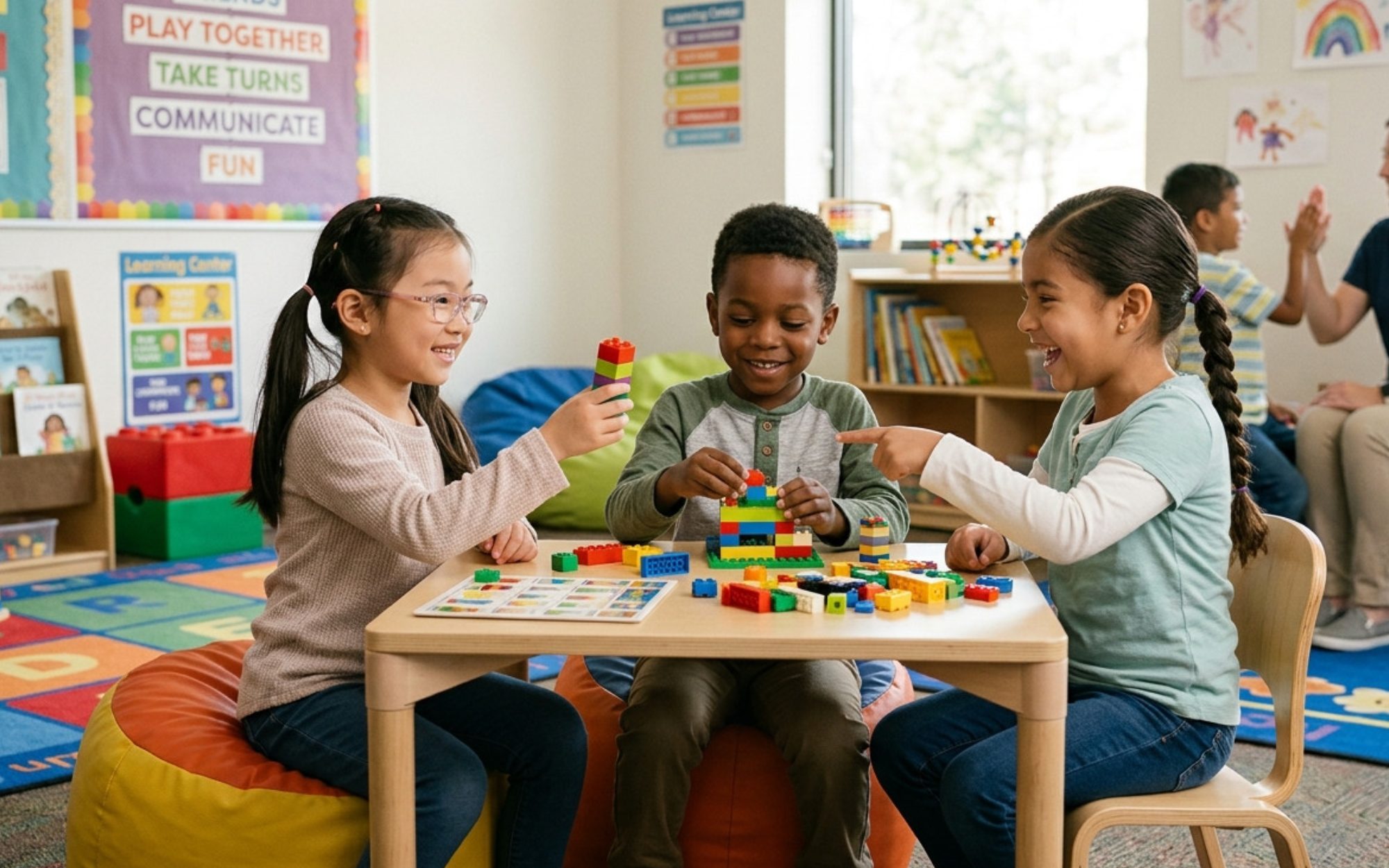
For many children with autism, making and maintaining friendships can present unique challenges. Understanding social cues, taking turns in conversation, sharing interests, and navigating group activities often require skills that don’t always develop naturally. This is where ABA therapy can make a meaningful difference.
Through individualized instruction and evidence-based strategies, Applied Behavior Analysis (ABA) helps children build the social and communication skills needed to develop positive peer relationships. By focusing on each child’s strengths and goals, ABA services create opportunities for meaningful interactions that can lead to lasting friendships and greater confidence.
Why Peer Interactions Matter
Peer relationships play an important role in a child’s emotional, social, and academic development. Positive interactions with classmates and friends can help children:
- Build confidence and self-esteem
- Develop communication skills
- Learn teamwork and cooperation
- Improve problem-solving abilities
- Foster emotional understanding and empathy
- Create a sense of belonging within their community
For children with autism, these skills may require direct teaching and consistent practice in supportive environments.
How ABA Therapy Supports Social Development
ABA therapy uses research-based techniques to teach socially significant behaviors in ways that are engaging, measurable, and tailored to each individual. Rather than using a one-size-fits-all approach, therapists create personalized goals based on a child’s current abilities and future needs.
Some common social skills addressed through applied behavior analysis include:
- Initiating conversations with peers
- Taking turns during games and activities
- Sharing toys and materials
- Understanding personal space
- Recognizing facial expressions and body language
- Asking and answering questions appropriately
- Practicing active listening
- Managing frustration during social situations
These skills are often taught through structured lessons and then practiced in natural environments, helping children apply what they learn in everyday situations.
The Benefits of ABA Services for Peer Interactions
High-quality ABA services offer more than skill instruction—they help children develop the confidence needed to participate in social experiences.
Improved Communication
Children learn effective ways to express their thoughts, needs, and feelings while also understanding what others are communicating. Stronger communication often leads to more successful interactions with peers.
Increased Social Confidence
As children experience positive social interactions, they often become more comfortable initiating conversations, joining group activities, and participating in community events.
Better Emotional Regulation
Social situations can sometimes feel overwhelming. ABA teaches coping strategies that help children manage emotions, remain calm, and respond appropriately during challenging moments.
Stronger Friendship Skills
Children practice essential friendship behaviors such as sharing, cooperating, complimenting others, resolving disagreements, and showing kindness. These foundational skills help build meaningful, lasting relationships.
Greater Independence
As social abilities improve, children often become more independent in school, extracurricular activities, and community settings, allowing them to engage more fully with their peers.
Autism Behavior Support in Real-Life Settings
Effective autism behavior support extends beyond the therapy setting. Many providers incorporate learning opportunities into everyday environments where peer interactions naturally occur, including:
- Classrooms
- Playgrounds
- Community outings
- After-school activities
- Sports and recreational programs
- Family gatherings
Practicing skills in real-world settings helps children generalize what they have learned and become more comfortable interacting with a variety of peers.
Partnering with Families
Families play an essential role in reinforcing social skills outside of therapy sessions. ABA professionals often collaborate with parents and caregivers by providing strategies that encourage positive interactions during daily routines, playdates, and community activities.
This partnership helps create consistency across environments, giving children more opportunities to practice and strengthen newly learned skills.
Building Meaningful Connections Through ABA
Every child deserves the opportunity to build friendships and feel connected to their community. Through individualized ABA therapy, evidence-based applied behavior analysis techniques, and comprehensive ABA services, children with autism can develop the communication, social, and emotional skills that support successful peer interactions.
With personalized autism behavior support, children gain more than social skills—they build confidence, independence, and the ability to form meaningful relationships that can positively impact every stage of life.
View our Blog page for more back-to-school resources like Learning Tree Sensory Craft, How ABA Therapy Improves Academic Performance for Children with Autism, and ABA Strategies for Managing Back-to-School Anxiety in Children with Autism.