
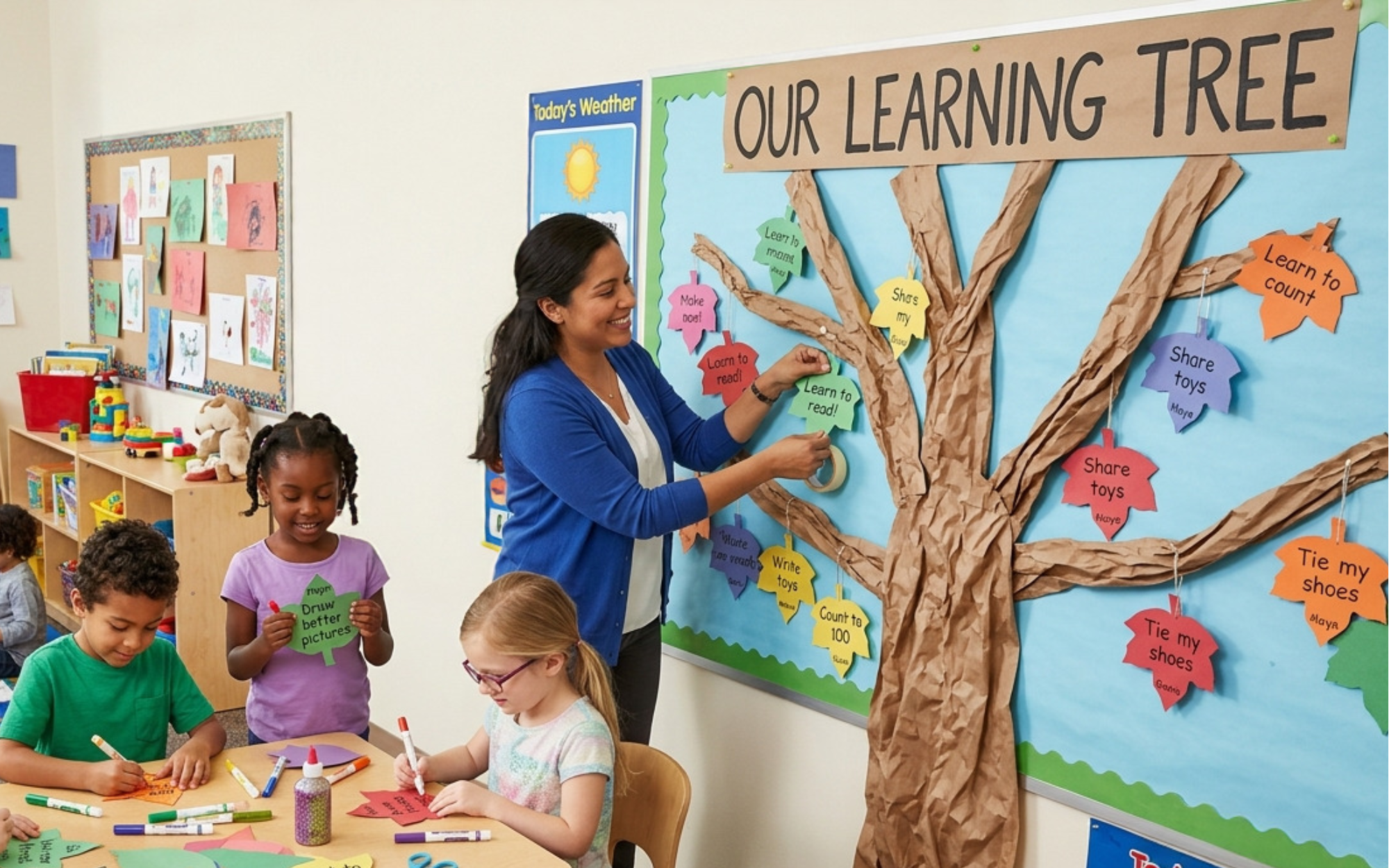
Watching children grow and achieve new milestones is one of the most rewarding parts of teaching and supporting their development. A Learning Tree sensory craft is a creative, hands-on classroom activity that encourages children to recognize their progress while strengthening fine motor skills, creativity, and self-confidence. This engaging project is especially beneficial for children of all learning styles, including those with autism, and can be easily incorporated into classrooms, therapy sessions, or home learning.
For educators and professionals providing ABA therapy, ABA services, or autism behavior support, this craft offers a meaningful visual representation of progress while reinforcing individualized learning goals in a positive and motivating way.
How to Make a Learning Tree
Create a large tree display on a classroom wall using construction paper, bulletin board paper, or cardboard. Leave plenty of room on the branches for colorful paper leaves.
Invite each child to decorate a leaf with one of their personal learning goals. Some examples include:
- Learn to read
- Count to 100
- Make new friends
- Draw better pictures
As children accomplish their goals throughout the school year, celebrate their achievements by adding new leaves with additional goals or accomplishments. Over time, the tree becomes a beautiful reminder of how much each child has grown.
Sensory Benefits of the Learning Tree Craft
Creating and updating the Learning Tree provides valuable sensory experiences that support child development. Benefits include:
- Strengthens fine motor skills through cutting, coloring, gluing, and writing.
- Encourages creativity and self-expression while decorating personalized leaves.
- Provides visual reinforcement of progress and accomplishments.
- Builds confidence as children see their goals achieved.
- Promotes classroom community by celebrating everyone’s unique journey.
- Supports language development through conversations about goals and successes.
- Encourages positive social interactions as classmates cheer each other on.
For children receiving ABA therapy or other ABA services, the Learning Tree can also serve as an effective visual support. Therapists and educators can use it to reinforce target behaviors, monitor individualized goals, and celebrate progress in a motivating, tangible way. Visual supports like this are commonly incorporated into autism behavior support strategies because they help make abstract concepts, such as growth and achievement, easier to understand.
Why the Learning Tree Works
Children are often more motivated when they can see their progress. Instead of focusing only on completed tasks, the Learning Tree highlights the journey of learning. Every new leaf represents another step toward success, reminding children that growth happens over time with practice and perseverance.
Whether used in a general education classroom, preschool, homeschool setting, or as part of autism support programs, this sensory craft creates an encouraging environment where every accomplishment is celebrated.
At the end of the school year, your Learning Tree becomes more than a classroom decoration—it transforms into a colorful display of confidence, determination, and the incredible growth each child has achieved.
If you’re looking for more back to school sensory craft ideas, checkout our blogs like All About Me Book, Visual Schedule, and Mood Color Wheels.