
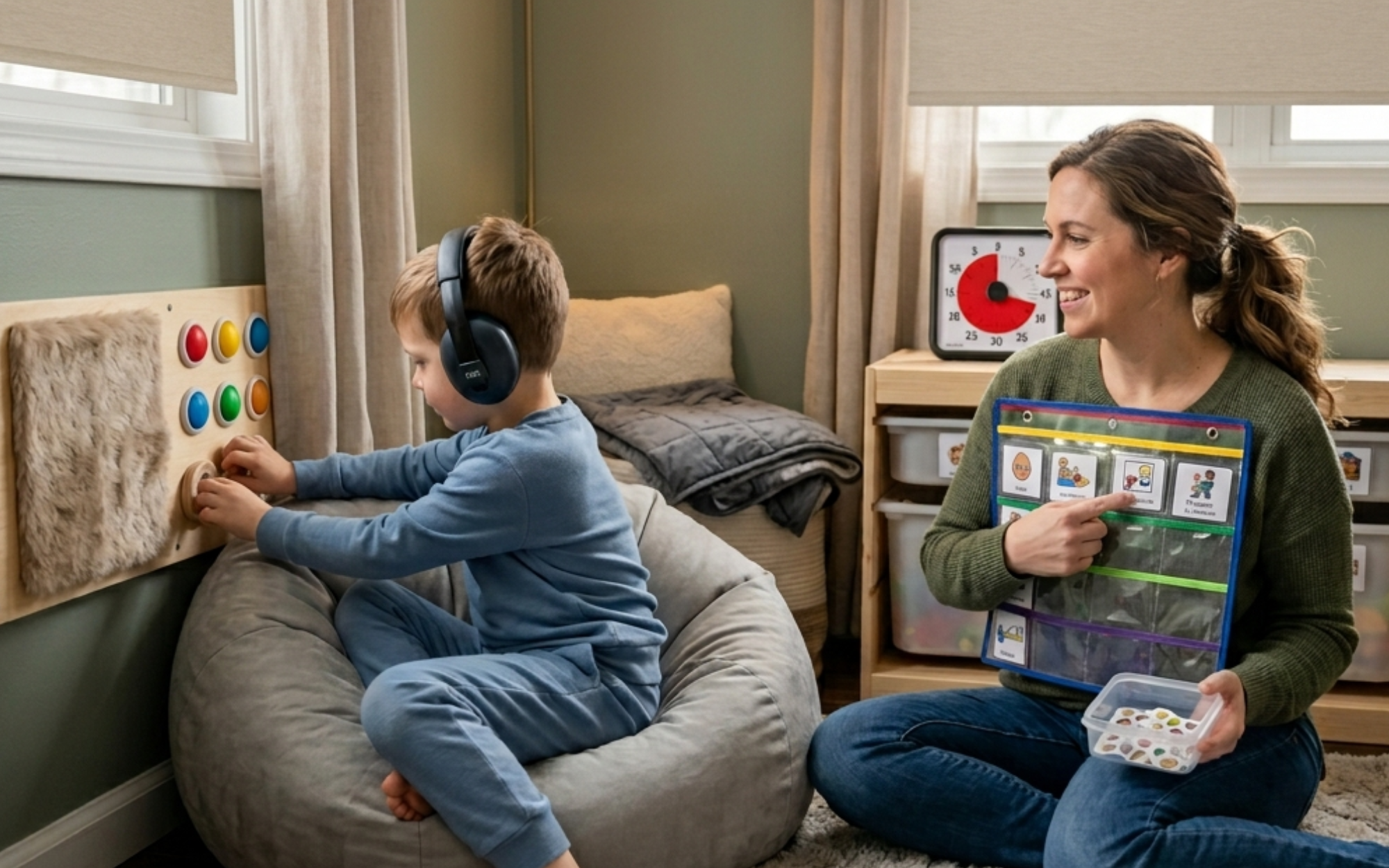
Creating a sensory-friendly environment at home is crucial for children and individuals with autism. A well-designed sensory space can help them feel more comfortable, reduce anxiety, and foster an environment where they can thrive. Applied Behavior Analysis (ABA) therapy, a well-established approach to autism behavior support, can provide valuable insights into how to create a sensory-friendly home environment tailored to your child’s needs. In this blog post, we’ll explore how ABA principles can guide you in setting up such an environment, as well as the benefits of incorporating these strategies.
What is ABA Therapy?
ABA therapy (Applied Behavior Analysis) is a scientifically validated approach that helps children with autism develop new skills, reduce undesirable behaviors, and increase independence. ABA therapy focuses on understanding how behavior is influenced by the environment, and it uses reinforcement strategies to teach socially significant behaviors. ABA services are highly individualized, which makes them particularly effective in addressing the unique challenges faced by children on the autism spectrum.
When it comes to creating a sensory-friendly environment at home, ABA principles can be incredibly helpful in understanding how a child’s sensory processing works and how their environment can be modified to meet their specific needs.
How ABA Principles Can Help in Creating a Sensory-Friendly Home
Creating a sensory-friendly environment with ABA principles focuses on modifying the physical space and routines to match a child’s sensory preferences, while also ensuring that the environment promotes positive behavior and growth. Here are some ABA-based strategies you can implement in your home:
1. Identify Sensory Triggers
One of the first steps in using ABA principles to create a sensory-friendly space is identifying sensory triggers. Children with autism often have heightened or reduced sensitivity to certain sensory stimuli, such as light, sound, textures, or smells. By using ABA techniques, such as direct observation or functional behavior assessments, you can determine which sensory inputs are overwhelming or calming for your child. This will guide you in making appropriate adjustments to the home environment.
Example: If your child has an aversion to loud noises, you can reduce background noise in their playroom by using soft background music or adding soundproofing elements.
2. Create Designated Sensory Zones
ABA therapy often utilizes structure and routine, and you can apply this to the home by creating designated sensory zones. These zones can be tailored to different sensory needs, offering a calm, structured environment for your child to self-regulate and decompress when they feel overwhelmed.
For example: Set up a sensory corner with soft cushions, dim lighting, weighted blankets, or tactile toys to help your child relax. Consider using visual cues, like a calm-down chart, to signal when it’s time for a break.
3. Implementing Sensory-Friendly Lighting
Lighting is a common sensory trigger for children with autism. Bright, flickering, or fluorescent lights can often cause distress. ABA therapy encourages a calm, predictable environment, which can be achieved by adjusting the lighting to suit your child’s preferences.
Solution: Use dimmable lights, natural light, or soft LED lamps. If your child is sensitive to light, blackout curtains can help minimize overstimulation.
4. Incorporating Predictability and Routine
Children with autism thrive in predictable environments. ABA services often emphasize the importance of routines, and this extends to creating a sensory-friendly environment at home. When introducing sensory activities or changes, consistency and predictability are key.
Tip: Introduce sensory-friendly elements gradually, allowing your child time to adjust. Visual schedules or timers can help them understand when activities will begin or end, reducing anxiety associated with transitions.
5. Use Positive Reinforcement for Sensory Exploration
A core principle of ABA is positive reinforcement. When your child successfully engages in sensory-friendly activities or demonstrates positive behaviors related to sensory experiences, be sure to offer praise or rewards. This encourages the child to continue exploring their environment in a positive way.
Example: If your child uses their sensory corner to calm down after becoming overstimulated, reinforce this behavior by offering verbal praise or a small reward, like a favorite activity.
Benefits of Creating a Sensory-Friendly Home with ABA Principles
Creating a sensory-friendly environment at home using ABA principles offers a range of benefits for children with autism:
- Reduced Anxiety and Stress: By identifying sensory triggers and making environmental adjustments, you can help reduce the sensory overload that often causes anxiety and distress in children with autism.
- Improved Self-Regulation Skills: With a sensory-friendly space and structured routines, children can develop better self-regulation skills, learning to manage sensory sensitivities and cope with overwhelming situations in a safe, controlled space.
- Enhanced Learning Opportunities: A calm and supportive sensory environment promotes focus and concentration, allowing children to engage more effectively in learning activities, whether it’s through ABA therapy or daily activities.
- Increased Independence: A sensory-friendly environment that caters to a child’s unique sensory needs can also promote independence. By offering tools and strategies that help them manage their sensory experiences, children can feel more in control of their emotions and behaviors.
- Stronger Parent-Child Bond: By using ABA principles to create a space that works for both you and your child, you strengthen your bond through shared experiences and positive reinforcement. The more responsive you are to your child’s sensory needs, the more secure and understood they will feel.
Creating a sensory-friendly environment at home for a child with autism is not just about making a space that feels comfortable—it’s about fostering an environment where your child can feel supported, regulated, and empowered. By applying the principles of ABA therapy, you can tailor the environment to meet their sensory needs, promote positive behaviors, and reduce anxiety.
With thoughtful planning and consistent reinforcement, your home can become a place where your child feels safe and where their growth and development are nurtured. Whether through ABA therapy, autism behavior support, or practical sensory strategies, the goal is to help your child thrive—one sensory-friendly step at a time.
If you’re interested in learning more about ABA therapy and how it can support your child’s sensory needs, contact our team at 855-4445664 for further guidance and support.
View our Blog page for more informative resources like The Benefits of an Autism Diagnosis, Sensory-Friendly Suncatchers For Autism Support, and Exploring the Role of ABA in Supporting Sibling Relationships in Neurodivergent Families.