
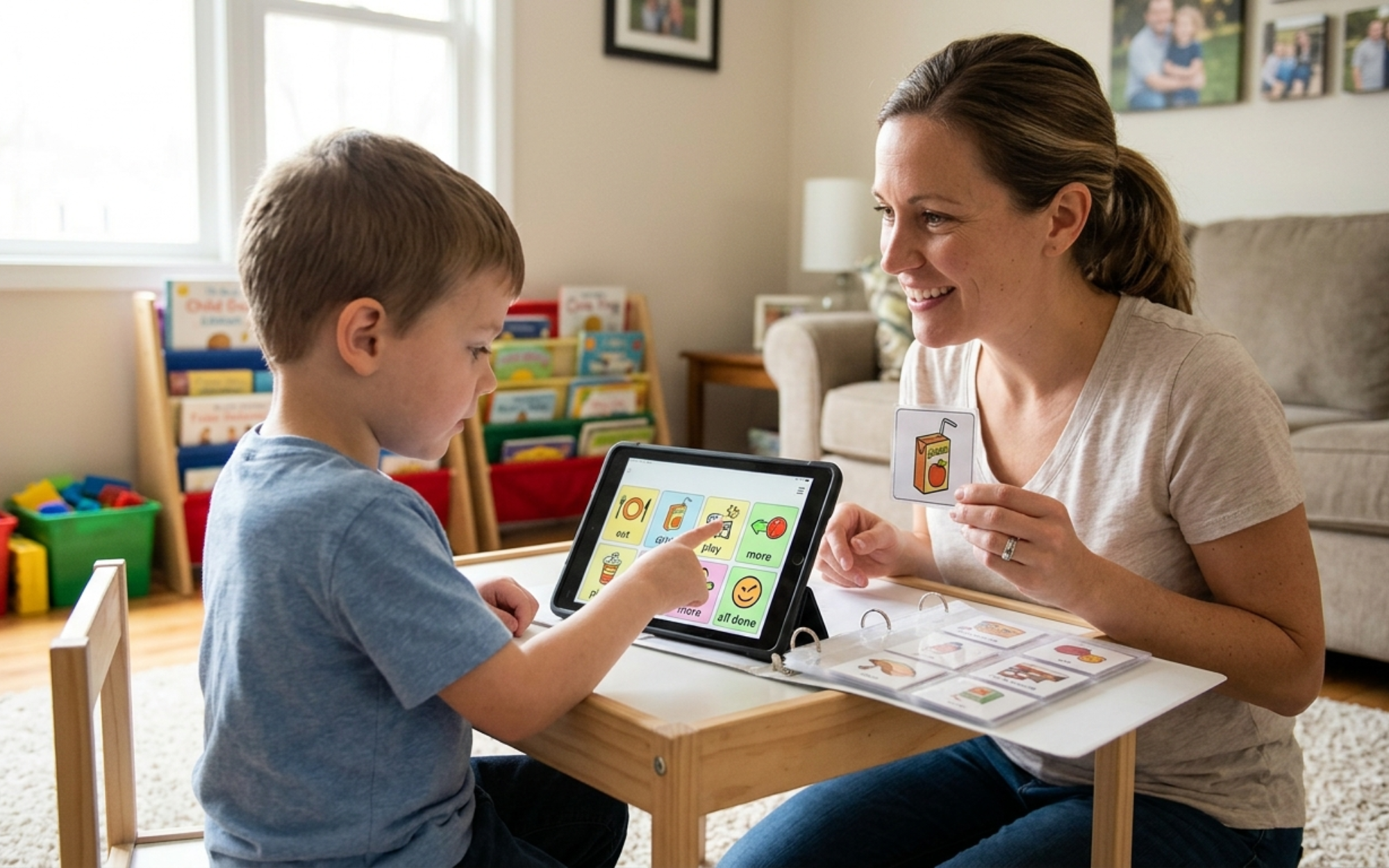
Communication is one of the most important ways children connect with the world around them. For nonverbal children with autism, expressing needs, emotions, and thoughts can present unique challenges. However, with the right support systems, therapies, and encouragement, children on the autism spectrum can develop meaningful ways to communicate and thrive.
Families navigating autism often benefit from understanding the different communication styles associated with Autism Spectrum Disorder (ASD) and learning how evidence-based interventions like ABA therapy can help foster growth and independence.
What Does It Mean to Be Nonverbal with Autism?
Nonverbal autism refers to individuals with autism who do not use spoken language as their primary form of communication. Some children may have limited verbal abilities, while others communicate through gestures, facial expressions, pictures, assistive technology, or alternative communication devices.
It’s important to remember that being nonverbal does not mean a child cannot understand language, emotions, or social interactions. Every child with autism has their own strengths, abilities, and preferred communication methods.
Common Communication Challenges in Autism
Children with autism may experience communication difficulties such as:
- Trouble expressing wants and needs
- Difficulty understanding verbal instructions
- Limited eye contact or social engagement
- Repetitive behaviors or sounds
- Challenges interpreting emotions and body language
- Frustration caused by communication barriers
These challenges can sometimes lead to behavioral difficulties when children struggle to express themselves effectively. That’s why early intervention and autism behavior support are so important.
How ABA Therapy Supports Communication Development
Applied Behavior Analysis (ABA), commonly known as ABA therapy, is one of the most widely recognized evidence-based approaches for helping children with autism build communication, social, and daily living skills.
ABA therapy focuses on understanding behavior and teaching skills through positive reinforcement and individualized strategies. For nonverbal children, ABA services can help strengthen both verbal and nonverbal communication abilities in a supportive and structured environment.
Benefits of ABA Therapy for Nonverbal Children with Autism
1. Encourages Functional Communication
ABA therapy helps children learn practical ways to communicate their needs, whether through speech, sign language, picture exchange systems, or communication devices.
2. Reduces Frustration and Challenging Behaviors
When children are given effective communication tools, they often experience less frustration, which can reduce behaviors associated with communication difficulties.
3. Builds Social Interaction Skills
ABA services help children develop important social communication skills such as turn-taking, responding to others, and engaging with peers and family members.
4. Promotes Independence
By teaching children how to communicate effectively, applied behavior analysis can support greater independence in everyday routines and activities.
5. Individualized Support for Every Child
Every child with autism is unique. ABA therapy programs are tailored to each child’s strengths, challenges, goals, and learning style.
Additional Communication Strategies for Families
Parents and caregivers play a critical role in supporting communication development. In addition to professional autism behavior support, families can help by:
- Using visual schedules and picture cards
- Practicing consistent routines
- Encouraging play-based interaction
- Celebrating small communication successes
- Allowing extra time for responses
- Using clear and simple language
Creating a supportive and patient environment can make a significant difference in a child’s confidence and communication progress.
The Importance of Early Intervention
Research consistently shows that early intervention can lead to improved outcomes for children with autism. Accessing quality ABA services early can help children develop foundational communication and social skills that support long-term success.
While every child progresses at their own pace, compassionate support, individualized therapy, and family involvement can empower nonverbal children with autism to communicate in ways that work best for them.
Supporting nonverbal children with autism requires understanding, patience, and evidence-based care. Through ABA therapy, applied behavior analysis techniques, and personalized autism behavior support, children can gain valuable communication skills that improve their quality of life and strengthen connections with the people around them.
Every child deserves the opportunity to be heard — and with the right support, meaningful communication is possible.
View our Blog page for more informative resources like Tie-Dye Pool Towels, Managing Meltdowns: ABA Tips for Handling Stressful Public Outings, and Outdoor Summer Activities for Autism Support.